

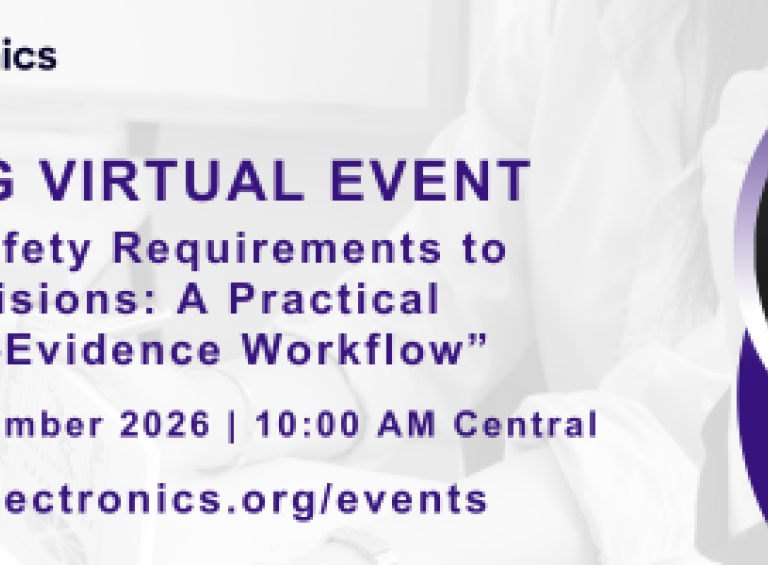
From System Safety Requirements to Rugged PCB Decisions: A Practical Requirements-to-Evidence Workflow
High-reliability electronic products often fall short of their safety and mission objectives because critical assumptions are lost as system requirements are translated into board-level implementation. This virtual event presents a practical workflow for converting mission profiles and hazardous failure effects into measurable requirements, cross-domain allocations, PCB design constraints, embedded diagnostic behaviors, and objective evidence for verification. An anonymized 48-V smart power distribution unit for an autonomous platform will be used as a running example to demonstrate the chain from a channel fault through hardware protection, firmware response, fault containment, reporting, controlled recovery, and verification.
This webinar is intended for systems engineers, PCB and electronic hardware designers, embedded software and firmware engineers, reliability and functional safety engineers, verification and test professionals, technical leads, and engineering managers involved in high-reliability electronic products. It will be particularly relevant to professionals working in aerospace and defense, automotive and e-mobility, robotics, autonomous systems, industrial electronics, and other harsh-environment applications.
This virtual event is methodology-driven and will not provide clause-by-clause instruction on a specific IPC standard. Where relevant, we may briefly reference IPC-2221C, Generic Standard on Printed Board Design, and IPC-6012F, Qualification and Performance Specification for Rigid Printed Boards, to connect the requirements-to-evidence workflow with established printed-board design and performance considerations.
Speaker Bio:
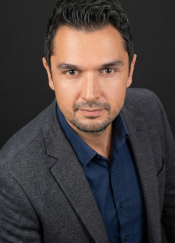
Nuri Başer Üstün, CSEP, FSCP, is the founder of DNB Engineering, where he develops systems, rugged embedded electronics, and software for defense and autonomous applications. He has more than fourteen years of experience in systems engineering, functional safety, electronic architecture, embedded software, and verification and validation. He is an INCOSE Certified Systems Engineering Professional and a TÜV SÜD Functional Safety Professional. His work focuses on translating mission and safety requirements into practical hardware, firmware, manufacturing, and verification decisions. His paper on human-in-the-loop safety for advanced driver-assistance systems received the Best Paper Award at the INCOSE International Symposium 2026.
